Saturday, August 20, 2011

Rosemead by Mike Walgenbach

As my feet tread carefully the ground in Rosemead, California,
My head considered the air from Auburn, Alabama,
Reviewing God, gold, and guns.
Mises fought Keynsians and Socialist fiat;
Nock the godless Wall St. Stalins.
Can you really know the world
From inside your car?
Out, out, inhale the space.
Feel the uneven upheaval of sidewalk rectangular,
Spot a spiny weed pushing through concrete cracks.
Peer down a lane and fix on the farthest point,
And measure it perpendicular to the street.
Pay attention.  Business doors are open
To greet the sun rising over San Jacinto.
Businesses don’t relent at night, opened doors still invite.
Owners lure you with a flickering neon lights
Don’t ignore the landmarks–
Burger King, Super A Foods, Denny’s.
The boulevard is a rush with streaks of light.
The crosswalk signal cold to the touch.
Drivers pull impatiently out of a gas station.
The boulevard smells of petroleum and burning cigarettes invigorate.
A shop is abandoned: a miscalculation.
A restaurant is closed.  
Dark windows at Goody’s obscure
The orange Naugahyde booths,
The clanging dishes, the calls for bacon and short stack,
Black coffee in ceramic white cups with red paisley designs,
The big short-order cook, and Helen.
A visit back to Auburn to Rockwell, Raico, Gordon, and Bloch.
Freedom called against 
Cherished memories of 6-laned Las Tunas Boulevard boyhood games:
Shakey’s pizza, miniature golf, and O’Donnell Chevrolet,
Gladys, Marguerite Thompson, dad's Willies, a house full of babies.
A '62, baby-blue Volkswagen bug.
Vincenzo’s--opaque and empty Chianti bottles held candles
On top of quaint red-and-white checkered tablecloths--is only a memory.
Mike Byers, from Santa Clarita, ate here on errands to the mission city.
Beto’s replaced it and courted local authorities.
Who can forget improbable Broadway Avenue?
The hospital where my grandfather lay dying uncomfortably with a broken hip.
A  few days later, Dad and I were viewing his body at Fernview Convalescent on San Gabriel Blvd.
Death reduced his body but not his head.  Though his body was small, his head was large.
We knelt a couple of respectful feet from my grandfather's body.
At my dad's side, I studied Pa's rigorous body.
Dad prayed, a rosary looped through his fingers and hung from his hand.
His Hail Mary quivered and his Pater Noster barely held.

In August 1966, he was the sole survivor of his family.
Without his mom, without his sister Josephine, and without his Pa.
Jim Beam massaged the memories of Ma, of Josephine, Denver, San Diego, and the War.
What would he do with their legacy?

Prayers were not inconsolable. 
My father's intersecting mind reviewed his father's storied life.
Pa's body was smaller than I’d remembered him.
The world seemed black and white and stark.
But even at that moment, holiness and prayer prevailed and colored it back again with love and life resurrected from death.

Celebrating Mary's Birthday on Friday, August 12 (Her birthday is Aug. 11, 1953, the same year that Josephine died.)

Lorenzo, Mary, and Raoule

Me and Mary
The note on the back of Ahna's 1993 photo.  At the top, it reads To: Mike.  Underneath that, in the middle, it reads From: Ahna Gunn.  Then at the foot of the picture, it reads '93 . . . 13 years.

Ahna is 13 years old here.  She gave this picture of herself to me in 1993.


Raoule is the best.


Mike, Mei, and Chuck Visitng Mom & Dad's Gravesite at Calvary Cemetery in East Los Angeles

Chuck visiting Mom's grave site on Saturday, Aug. 20, 2011.
Chuck and Mei placed bright, fresh flowers on Mom's and Dad's grave site.

Mom & Dad's grave marker.  There is no paint on Dad's name.  After Mom's funeral, Dan had Dad's marker replaced.

Pa's gravemarker.
Where are Chuck Pullman's name and dates? 


Sunday, June 5, 2011

A Letter I Had To Write


Dearest Anne,                                                     Saturday, January 30, 2010
I received your warm greeting of a Christmas card and your generous gift of Freedom Writers, the movie and the book.  This Christmas was a lonely one for me.  My mom was sick, and two of my brothers got into a nasty fight via emails for every member of the family to see.  It was not pleasant, given the fact that my mom was sick.  She woke up one morning bleeding in her reproductive area.  My brother panicked, consulted my other brother (the two of them live with my mom) and decided to call 911.  An ambulance showed up and took her to the Emergency Room at Arcadia Methodist Hospital.  The ER doctor took an X-Ray of her lungs, drew blood, and ordered a room made available for her that afternoon.  My mom has always hated doctors and hospitals, so submitting to such treatment crushed her spirit.  My older brother made the decision to get her to the hospital, I am sure against her wishes.  I’m sure, too, that he was hoping to see some numbers on white blood cell count and analyze them, figure out what is the best treatment, get her well, and get her home.  Instead, the doctors began a regime of antibiotics, one called Zosyn.  A nurse friend of mine explained to me that that is one of the more mild antibiotics.  I stayed with my mom the first night.  She was anxious.  I talked with her about the past, about my father who died in ’88, reminding her how much he adored her.  It was a real privilege for me to sit with my mother.  Though she was sick, she was still able to remember her days in the orphanage and how she and her sister and brother used to vie for a seat on one of her mother’s legs while she sat and visited with her children on Sundays.  We remembered, we talked, we shared stories, and we laughed.  I held her hand, gently interlocking my fingers through hers, caressing each digit, and then holding her fine hand in mine.  It was good that I stayed with my mother that first night because the staff would have treated an 89-year-old woman as senile.  She wasn’t; she was exhausted from being sick for so long.  On the first night in the hospital, a nurse came in and asked her for a urine sample.  Mom said, “I already gave one in the ER.  Mike, tell her.”  I did.  The nurse couldn't argue with a witness and withdrew.  But if I wasn’t there, I am sure that she would not have believed her and would have badgered another urine sample from her.  Over the next couple of days, the doctor ordered test after test.  And why not?  Here was an 89-year-old woman with complete medical coverage.  So the monitored machinery rolled in by indifferent technicians, senseless except for their technical knowledge, oblivious to bedside manners.  All the tests came back normal we were told.  We never saw a report; never saw the numbers so that we could ask what this means or what this tells us.  The IV dripped antibiotics relentlessly in her system.  Her breathing became labored.  A respiratory therapist came in and gave her a treatment.  He put a mask on her and filled a tiny cup of the mask with an anti-asthmatic drug through which steam pumped and dilated her air passages.  It helped but only a little.  Mom was disappointed.  But it was the best thing available, and because it was the best thing available, it was all they gave her for her breathing problems.  I wonder if it made things worse.  After examining her breathing with a stethoscope, the respiratory therapist claimed that her lungs were functioning pretty well.  I said, “Wait a minute.  Wasn’t she admitted for pneumonia?”  Yeah, but she may have had only a mild case of it, was the reply.  So now I am gyrating between relief and confusion.  Why was she still in the hospital then?  The answer was that she had to wait until a gynecologist saw her and tried to fix things.  The gynecologist saw her, tried to reposition things.  My mother resisted.  She kicked and screamed.  I knew she would.  She doesn’t like doctors and their monkey-like orderlies or any stranger pawing her in areas of which only she and God, and occasionally my father, had knowledge.  So now the doctor was at an impasse.  He would have to leave her in the same condition that she came to receive care.  They transferred her to Transitional Care.  She grew weaker by the hour.  The several days of antibiotics killed the infectious bacteria, but more importantly they killed all of her good, vitalizing gut flora, her good bacteria, decimating her 89-year-old immune system and leaving her vulnerable to poisonous by-products that further constricted her breathing, made her so weak that she couldn’t use her hand to bend a straw to sip water from a cup; now, she couldn’t eat and now her eyes were fixed open from days of sleep deprivation in the hospital.  By the time she reached home, she couldn't relax her eyes long enough to rest them and get sleep.  With her nerves shot, her muscles were not working.  Most of her utterances were moans.  On the night she arrived home, she did find the strength to utter, “Mike, what did they do to me?”  The antibiotics and the uncomfortable hospital beds made it impossible for her to sleep.  (By the way, garlic is the best natural antibiotic; it is remarkable in what it can do.  The antibiotics the hospital gives destroys people and their good gut flora.  This is why I think that most elderly people die in the hospital.  It is deliberate, but not before the hospital milks the patient of paid services.)  She was awake in the hospital for four to five days.  Guess what the nurses did?  They gave her sleeping medication, as if her poor system wasn’t already in shock from the antibiotics.  As she grew worse in the hospital I insisted that she be released.  I wanted to take her home the first night.  I confronted the nurse, telling her that my mom was too anxious and that she would be better off at home.  My mom knew she was dying.  She said as much; she said she wanted to die, but that she preferred to die at home.  My family fought me, saying that she was getting the best care at the hospital.  I was appalled because their words contradicted what I saw and what they saw.  They could see with their very own eyes my mother’s demise.  After a week, we finally got her home.  Hospice care provided a bed and an oxygen machine, both of which were positioned in the front living room.  My mom died two days later.  The hospital, her assigned doctor, and the antibiotics killed her.  Anne, I lost my joy, the only person in the world who was always happy to see me.  Always I could count on a warm smile, an enthusiastic clap, and victorious raising of her fists as her expectant eyes met my tall figure entering her door.  She was my one true love.  Mothers always love seeing their babies.  She was much better than I to forgive.  My life is changed hereafter.  Thank you, Anne, for the affectionate Christmas wish.  I love hearing from you.
With love,
Michael


FACTS OF MOM'S LIFE

An outline of Mom's life, of her qualities that I composed for the Immaculate Conception priest who performed Mom's eulogy.
Bisbee, Arizona.  Born Celestine Ann Stockham in 1920 in Bisbee, Arizona, the copper capital of America.
Grew up in Denver, Colorado.  Her mother and father divorced, placing Sally, Jim, and Claire in St. Clara’s Orphanage in Denver.
B.      With the help of her movie-star good looks, Sally achieved acclaim at St. Clara’s with her performance of Cinderella in a play of the same name.  caught unawares for one moment, a nun directing the play thought that Sally wasn’t paying attention and slapped her loud across the face and knocked her down.
C.      Sally led the fun.  One time she saw a nun go into her room to rest and taek a nap.  Sally took a nearby ladder and placed it just outside the nun’s door, climbed up and peered through the window above it to see the nun lying in bed bald with her wig off and set aside. 
D.     Sally developed a terrific vocabulary at St. Clara’s.  She always enjoyed sitting with me as I solved crossword puzzles.  She was like a walking thesaurus and dictionary. 
Los Angeles, California
A.     Sally marries Charles Walgenbach in 1940.  she absolutely loves the Southern California sunshine and her view of the San Gabriel Foothillls.
B.      Charles is drafted into the Marines and is shipped out in 1942 to the Marshall Islands in the Pacific during WWII.  Sally stays behind in their tiny apartment in Alhambra, CA.  they write love letters to each other.
Didn’t always have the right answer to people’s personal problems, but she had the wisdom to be empathetic and express sweet empathy.   
Dealt with things with a wry sense of humor, waiting for that sparkle in her eye because we knew that she was observing some irony in people’s statements.
She was kind, generous, animated with each member of the family.  In her presence, she focused on you, assessing if everything was just right. With children, with her children, she was kind, active, loving, sacrificing. With adults, she loved teasing and joking and had fun being silly.
Cute lady.  Stylish, demure, she knew she was cute.  She was adorable. 
Favorite vegetable—asparagus
Favorite color—pink
Favorite singer—Bing Crosby.
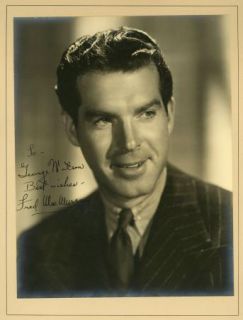
Favorite actors.  She loved Edward G. Robinson as a performer.  But as a leading man with good looks and command, it was Fred MacMurray.
Care and nurture each other.
Smart with a remarkable vocabulary.  A great companion to do a crossword puzzle with.  She penned some of the most beautiful love letters to her husband while he was away on the Marshall Islands in the Pacific during World War II.  Expressing love was easy for her. 
Hard worker, starting with her job as a comptometer, a mechanical calculator.  She trained in Denver and later worked as a comptometer operator at the Sears Building in Los Angeles.
 
Skilled, she learned to cook, clean, and be handy around the house at Aunt Gertrude’s. 
She baked, learned clever ways of ironing fast and to perfection. 
Athletic, too.
At baseball, she could hit and run.
At skating, she was the best, too.  This is the kind of scene she would have enjoyed.  Except his is actually shot at Evergreen, CO, which is up in the hills.


A Draft, My Draft of Mom's Obituary

This was written about the first week of February, 2010

. . . because it steals love away.  The work it takes to build love—those are our memories.  One has to start all over again with fewer resources.  Guess I’d better get started. 
 
I now thought of death in the third person because it was more incarnate.  Before it rested in the back of my head as something psychological, something distant, and something that could be conquered in poetry or art.  I now had disdain for art and artist, who’d so egotistically believe that writing about death, was somehow an act to overcome it.  Tell that to my mother, who was lying on the other side of consciousness.  

The indomitable Celestine “Sally” Ann Walgenbach was conquered Wednesday night by complications from pneumonia.  [As doctors used her age against her to account for her demise, I want to use it here to celebrate her]  she possessed an unmatched tenacity and a set of remarkable survival skills: Sally lived courageously and intelligently in each of her 89 years.  Way to go, Ma!  She spent her last hours at home with her sons and daughters and grandchildren on whom she showered love, energy, and joy over the decades.  She was a hero to scores, enabled no one, gave birth to eight, and is survived by seventeen, adoring grandchildren.  We love you, Mama.  Your strength and power is multiplied in us.  thank you for your courage and for you love.  You are forever in our hearts and on our minds.

The bell tolls loud and far for this incredible woman whose life was filled with so much joy in her final years.

IN THE LAST FEW MONTHS OF MY MOM'S LIFE

I had a few wonderful moments with my Mom in the last few months of her life.  Every time I think of her last years, I picture her in her bed either lying down or sitting up.  
One time I caught her out in the front room distraught over feeling alone.  Chuck was at work.  Tom was at work.  I stopped by periodically, so did Dan.  Joe not so much in the last weeks of her life.  I don't know why.   
It was a winter evening, sometime after Thanksgiving, and I arrived at Mom's home.  I entered her room, where she awoke to my presence, telling me how much it meant to her that I was there.  She was dying and dying alone.  As she touched my arm and my sleeve, she says to me “Mike, that’s such a nice jacket.  Boy, that’s really soft.  Is that suede?” she asked as she caressed my sleeve.  I said no.  
“That’s a nice jacket,” she affirmed. 
Mom, I miss you terribly.  How can I honor her right?  Today is Sunday, June 19.  It is late, after 12pm.  Tomorrow I will put up pictures of her here.  I love you, Mom.  Goodnight, Sweetheart.